100 Things I Learned From Designing Tech Products for 12 Years
What 12 years of designing products taught me about users, human behaviour, words, startups, clients and AI.
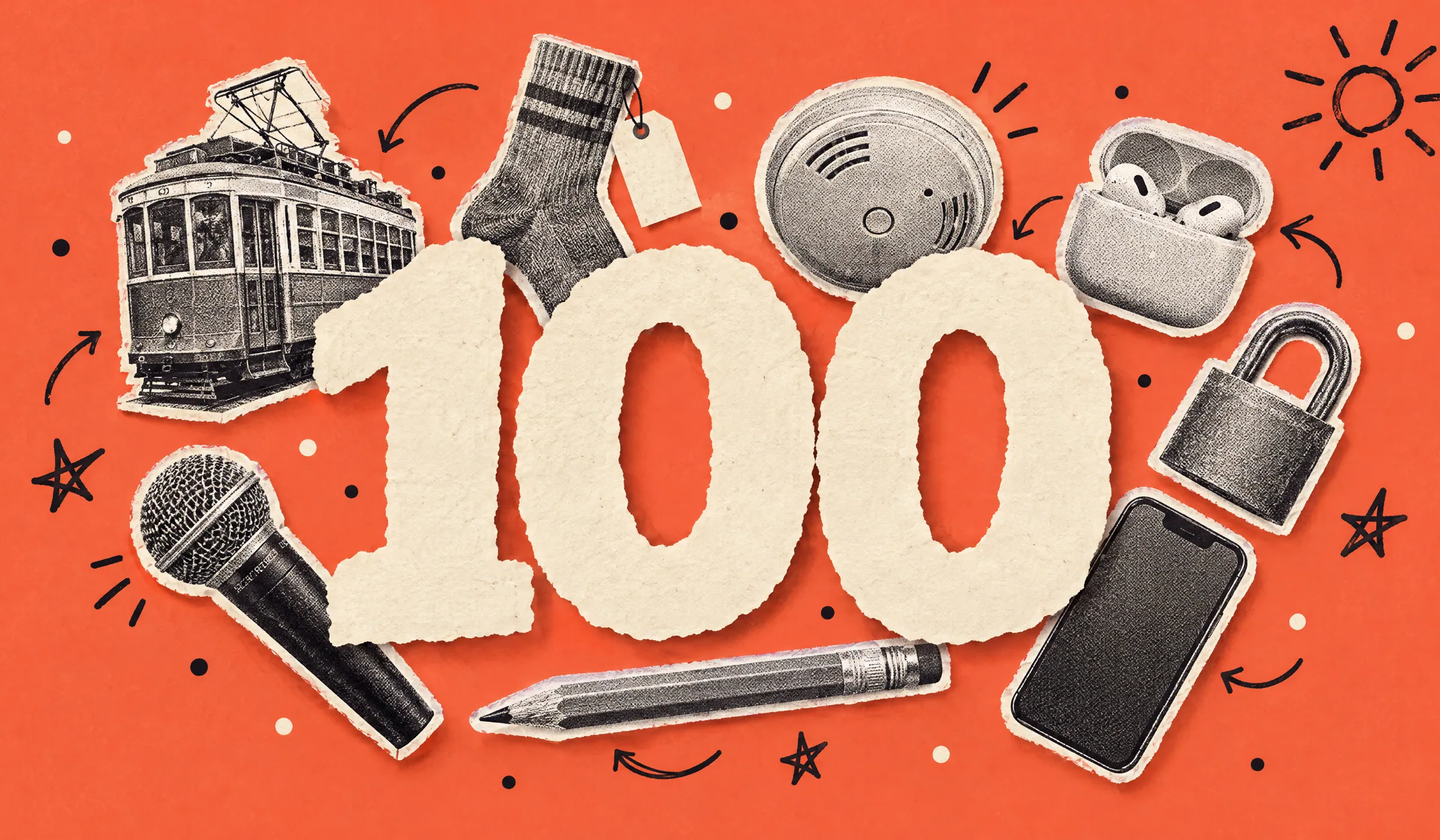
For 12 years I’ve designed tech products, mostly for US startups. I ran a design studio, spent years as a founding designer and built and launched a few products of my own.
These are the 100 things that stuck.
- Start with words. Write it down first.
- Copy is the interface.
- Sales is king, even for poorly designed products.
- Brand, marketing and great UX win the long game.
- 90% completion of a product takes 10% of the time. The remaining 10% takes the other 90%.
- Design the states nobody demos: empty, loading, error, expired. That’s where customers live. Good UX is in small details.
- A new product asks people to break a habit. Make it do one simple thing great, so the switch is worth it.
- Every error needs a way forward. “Something went wrong” is a dead end, not a message.
- Building my own product taught me how badly a founder wants one more feature. Ask customers what to take out instead.
- People rarely pick the best option. They pick the one nobody will laugh at them for.
- Much of design is removing the small worries that stop someone from saying yes.
- Design for the average and you fit nobody.
- Most “human error” is a product asking people to behave like machines.
- Your UI is the furniture in a small apartment. Every new piece makes the room harder to live in.
- Every feature is a child you adopt. Before you take one in, name the moment someone needs it.
- Don’t reinvent the basics and norms. They work for a reason.
- The best ideas and solutions come from watching user behaviour.
- When a customer asks for a feature, wait. See how long they live without it.
- Ask people what they think of today and they’ll tell you. Ask what they’ll want tomorrow and they’ll guess.
- Judge a product by the moment everything goes wrong at once.
- On a tram I watched a man give up on his new “ethically built” phone because he couldn’t find the SIM slot. A good mission won’t save a bad UX.
- Accessible design isn’t a niche. It’s always the foundation.
- Live your users’ life. A persona written at a desk rarely survives the first real user.
- For most people, the default is the decision. Make smart defaults so users don’t have to think.
- After I bought a TV, I bought the same brand’s speakers and console, even though other brands made better speakers. The first yes makes the next one easy.
- People stay loyal to what they helped build. IKEA customers love a wardrobe they put together themselves.
- I once queued with a crowd at the wrong gate, knew it, and still doubted myself twice before leaving the line. Never underestimate the crowd and social proof.
- I paid way too much for one pair of socks right after buying a suit for a wedding. People judge every price against whatever sits next to it.
- Assume people will make the obvious mistake, then design it out. That’s why the ATM gives your card back before the cash.
- People use your product however makes sense to them, not how you planned it.
- The more you know, the harder it is to remember not knowing.
- Simplicity is perception. A flight schedule that looked like a weird spreadsheet to me was simple to the product manager who knew it.
- I still catch myself adding a button because a screen looks empty. Empty is fine. Adding more is worrying.
- Nobody cares how it works. My mom never asked how her AirPods work; she knows they connect when she opens the case.
- Pixel perfect and beautiful animations rarely win. They are more of a nice-to-have.
- A designer I interviewed on my podcast told me a great product has a wink. Keep it to one, because a wink repeated ten times is a tic.
- Feedback should be instant and say what to do next. Don’t delay it.
- Ask “Are you sure?” too often and people will click Yes on the one that matters.
- When people fail, show them how far they got, not how far they fell short.
- Pay people for something they enjoy and they stop enjoying it the day the pay stops.
- Give your product a personality. Why be so serious?
- Every touchpoint should tell the same story. Customers can tell when the app, the website and the deck came from three different teams.
- Too many choices and people leave. Four is plenty, with the one you recommend on top.
- Try to build and design for your own needs first. Great way if you don’t know where to start.
- You don’t have a scaling problem; you have twelve customers. Solve theirs. Others will follow.
- Trust the usage data over the demo. What wows the sales room can sit untouched after the sale.
- When a product struggles, do what Gordon Ramsay does: cut the menu from thirty dishes to ten and polish what’s left.
- People want the result, not the workflow.
- A refund is a “bug report”. Find where people got confused, stuck or surprised, and fix that exact spot.
- When somebody is scared to touch a flow that works, change it one experiment at a time. For me, once, a few icons on a wall of text were enough to make a big change.
- For some businesses, design that doesn’t move a number will always come second.
- Easy to measure and important are rarely the same list.
- Focusing too much on metrics and forgetting about UX is what lowers product quality over time.
- What looks like a preference in your data is often just how you designed the choice.
- Nobody remembers who was first. They remember who did it best.
- Designing my own product, I caught myself copying a competitor’s screen. I threw it out and shipped my own good-enough version.
- To find what to fix, ask how you’d ruin the product.
- I used to think my job was making things faster and prettier. The bigger wins came from changing how people saw them.
- At some startups I worked for, management decided everything and then asked design for “the candy look”. Asking which business problem we were solving changed that.
- In most companies, the founder’s or management’s ego, or the investors’ desire, will drive most decisions. Whoever pays for the music chooses the song.
- No matter the problem you are tackling, always come in empty. Fill yourself with questions and keep asking until you achieve clarity.
- My biggest losses came from questions I didn’t ask.
- Sometimes people really care and want to help. It’s just you never truly listened.
- At my first job I lost the room fifteen minutes into presenting a redesign, and the project died. I didn’t trust myself, so nobody else did.
- Learn to sell and speak well. This will get you further than you think it will.
- One ship, one captain. I worked at a company with two, and it ended badly.
- Doing the craft and running the business are two different jobs.
- If three people can’t build your first version, the product is too complicated or they’re the wrong three.
- Put problems on the roadmap, not features. A feature with a date next to it becomes a promise.
- Launching the product, feature or service is the only test that tells the truth.
- A founder I interviewed on my podcast told me you don’t need to build the next big thing, you need to solve a problem.
- I’ve sat in CEO meetings run on AI FOMO. Breaking old things is good; breaking working things for a tiny improvement isn’t.
- Every year there is a new bubble. This year it’s AI. If you get outside of it, people barely know how to use a laptop.
- I ditched Figma for Claude Code. The tool never mattered; closing the gap between the design and what ships did.
- Copying got cheap. Trust didn’t.
- Let people copy you. Trust climbs one kept promise at a time, and nobody can copy that.
- I never went to design school. I got fired with no backup plan, spent my first two months depressed, and a couple of years later had a profitable business. Trust the process.
- Writing made me a better designer. Clear sentences make clear products.
- Write and build in public. One CEO hired me after reading my articles and listening to my podcast.
- Start writing. Write about anything. That’s how you discover new ways.
- Most redesigns fail in the thinking, not the visuals.
- Before you criticise someone’s product, try building a better one and shipping it. See how that goes.
- Scrolling Dribbble is how every product ends up looking the same. When I’m stuck, the answer is rarely on a screen. Go offline.
- Be willing to say you were wrong. I once redesigned a product more times than I can count, and the problem we were solving was the wrong one.
- Talent shows up after years of daily work, not before.
- I started a podcast because talking to strangers terrified me. The fear shrank one episode at a time.
- On my podcast, the guests who had achieved the most had the smallest egos.
- Sell outcomes, not hours. Hourly billing is a dead end.
- In a negotiation, whoever cares less about the outcome is in the stronger position.
- Sometimes it’s just not the time. Not that you, the work or the product are bad. Timing also helps. Some call it luck.
- Watch out for the small boxes. The quick favour for a friend is the job that eats your month.
- Money tests people. Get a lawyer before you need one.
- Friends and business is thin ice. I’ve fallen through it.
- Losing clients is normal. Like the trams, another opportunity comes along in fifteen minutes.
- Sometimes just letting it go is the best answer. Don’t waste your energy, pick your battles.
- Patience wins. I once lost a deal at the finish line because I rushed it.
- You don’t open a business to be on the safe path. Test something new, then test again.
- It’s always about people. Products are made by people, for people.
- AI isn’t killing software. It’s pulling the weeds so we can grow something better.
- The future is bright no matter what the world tells you.