22 Things I Learned From Designing for Startups
This is the second part from “What I learned from working with startups” and make sure to check first part for the Business lessons.

This is the second part from “What I learned from working with startups” and make sure to check first part for the Business lessons. But in this one I am going to talk mainly about design and mistakes startups make when building their product.
Somehow it was sold to us that we have to build the next big thing. And we are trying to build something “disrupting” and lose focus on why we really started a company. You can dominate a market by having a small product. You don’t need to be the next Uber or Facebook. And because we have these big aspirations, many of us fail to build a truly great product. So lets get started.
Product
Design the product for your needs
It is always a good idea to adjust the product to your own needs. And people may not agree with this one. But if you don’t know the customers needs and wants, than this is the best second and first thing to do about your product.
If you are trying to cut corners with your product, in the long run it will show up
I will just say it once and you can believe me or not. When you make a product only for the sake of money, it will show up. No matter what. If a product is bad, it always loses the long run.
Copywriting first, Design second, Development third
Never start with development first when building a product. Always begin with a story and goals you are trying to achieve, then design the framework. After, fit in that framework the code. And please don’t do vice versa.
When building your next feature or big thing, assemble a team of 3 max
Don’t put your entire team to work on the next big thing. Just assemble a team of 1 designer and 2 developers and protect them from the entire company. Let them work alone for an entire month on the next feature. You will get much better results this way.
If you did not launch the first version of the product by yourself, chances are you will fail
Every time an entrepreneur who has an idea for a product comes and asks my company to build their product, I know they will fail. Why? Because he is lazy. I can’t imagine at least one appropriate excuse on why you can’t launch a V1 for your product by yourself. Don’t outsource the work, just do it yourself. Once things start going and you feel you need help, hire someone to help. We live in an age where almost everything is possible, it’s just a matter of how creative you are.
Define your product vision and go for it
You have heard this story I think in more than ten thousand articles. But it is a problem that a lot of people still face it. Define what you really want, and go for it. It applies to product, life and everything.
Got a new feature in mind?
Whenever you have new cool feature in mind for your product, ask yourself this question: “Is there a life situation where it will be useful for our customer and will solve a meaningful problem for them?” This is where most of the ideas fail.
Don’t waste your time on problems you don’t have yet
I could write a book on this topic. Most of you will spend time on envisioning how the future product should look like instead of focusing what you can deliver now. Stop wasting time on anticipating the future issues or features. Just deliver a good simple product and then as time passes, add new features.
Stop copying other big companies who made it
How many times I head it. We want a website like this company or we want sleek looking product like that. Sounds familiar? It is hard to come up with something new and most of the people don’t succeed, hence they copy other successful companies. But it is better to fail 9 times and succeed the 10th then be like the rest of your competitors.
Make your product opinionated
How should your product be? Funny, intelligent, intuitive, sarcastic, glamorous. Choose a couple of adjectives that will describe it best and built its personality around it.
Launch something and work in iterations
It is way better to launch a product after a month that works well with bare features than working for half a year on a product, launch it and realize it is a failure. If customers will care about the product, they will not look at the fact that it is not finished. From contrary, they will help you to spread the word, give feature ideas and so on. So you can launch often and iterate fast.
UI Tip: design for blank, filled and error states
Sometimes when you open certain apps, you ask yourself if it is even working or not. Empty states should be an opportunity to encourage the user on doing something.
Design for stress moments
User testing is broken. Test via real time usage and not in the lab. If you want to get real about how people use your product, exhaust them, bring them only bad news for the entire day then at the end give them to test the product. And what you will receive as an answer is what I call real feedback.
Show help messages on what each feature, icon, text or action does
It will make the process so much easier and pleasant for the user. Just imagine the user does not know anything about tech and he is using software for the first time. Try not to be too intrusive with help messages, but give subtle help when it is really needed.
A list of features you want to add only overloads the entire product
The product should do this, that, than this and than that. It is useless. Just ask yourself: “What else can I exclude from the list to make it more simple” Will they be able to perform this task without this one? If yes, then great. If not, then repeat the process and ask yourself again what can be removed.
When it comes to software it is all about the people
It doesn’t matter whether you have the most advanced hardware, best coding practices, the most sleek design and so on. In the end, products are about people. They are for them and made by them. So try to make the relationships valuable and pleasant so your end product can reflect that.
Make your product 10% human if you can’t 90%
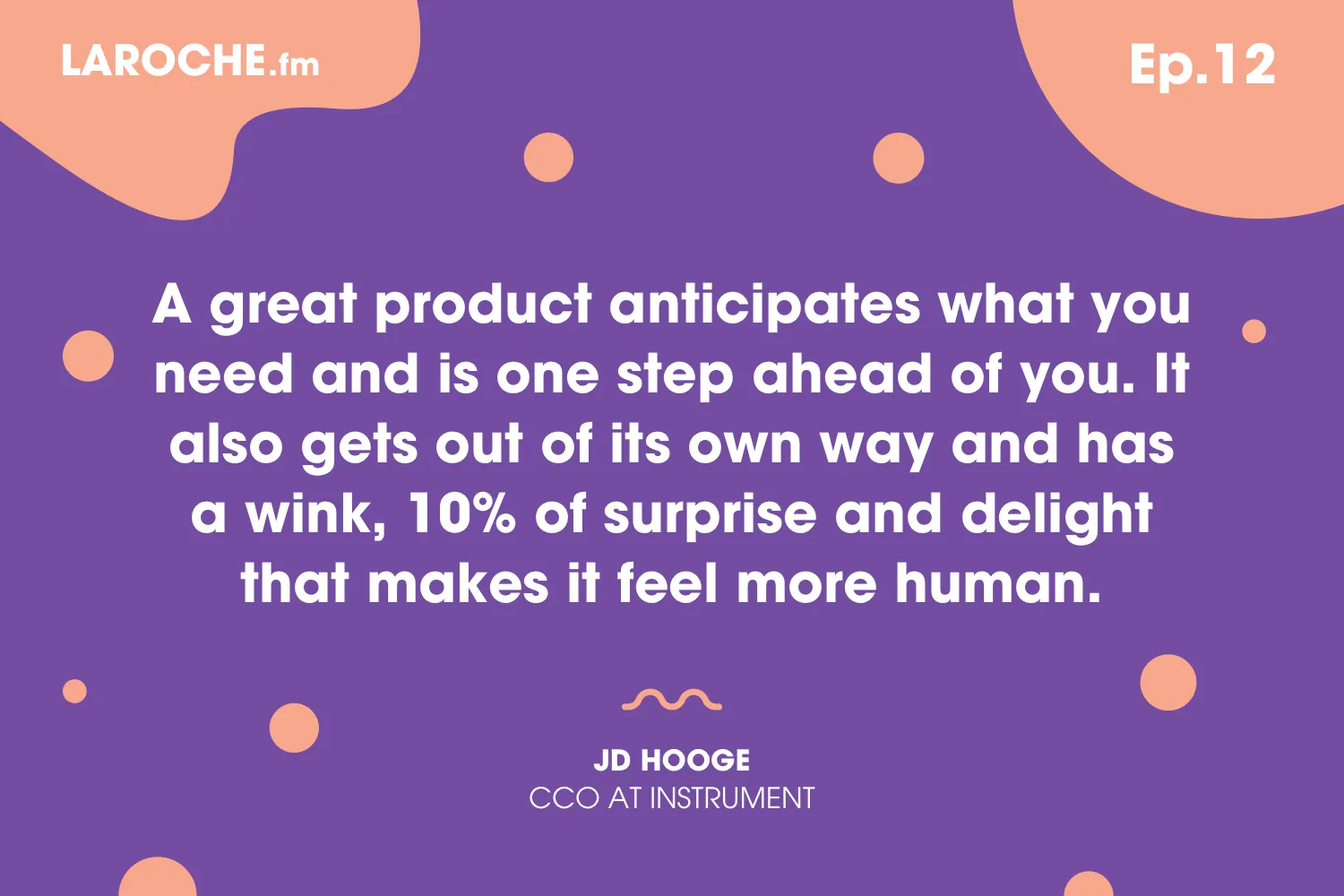
When I had a podcast interview with CCO of Instrument, JD Hooge, I asked him what is a great product for you. To which he answered: “ A great product anticipates what you need and is one step ahead of you. It also gets out of its own way and has wink, 10% of surprise and delight that makes it feel more human.”
You don’t have a scaling problem yet
Stop focusing on dumb stuff. You don’t need to think if your product is going to be able to handle 1mil users. You already have 1 million users? Congrats, you have a big pain on your head. Otherwise, stop chasing big dreams and start working on what you have in front of you. Solve current issues for your 12 customers and other 1 million will come later.
Customer
Your customer almost never knows what he wants
It is a tricky subject. A customer never knows what he wants because he can’t see what he needs. If you know how people think, you know that it is hard for us to judge an issue from another’s perspective. So we almost always say what we wish for but not what really needs to be done. So trusting your own intuition is a good thing.
Ask your customers what can be taken out
Most of the time you ask your customers “What would you add here?” or “What is missing?”. But it is more challenging to ask a customer, what would you wake out from here.
Because a lot of people request a feature, it does not mean you have to include it immediately
Even though you have 100 customers who request the same feature, wait a bit. See how long they can go without it. It always helps to test a feature through time.
Trust yourself
This should have been the second most important thing on the list on both articles but hopefully you went through the entire list. Leo Tolstoy has an entire essay dedicated to trusting yourself. If you have a chance, read it. Not matter how things go in life or business, whether it is bad or good, whether your product sucks or is flawed, always trust yourself and just keep going.
Make sure to check Part 1 for business lessons learned.